Company Internal Audit Report Templates
The Importance Of Internal Audit Reports In Ensuring Organizational Integrity:
The following article contains information and best Templates for Internal Audit Report. An Internal Audit Report is a very vital tool used to evaluate internal controls, risk management processes, and governance procedures by companies and organizations. Internal audit templates typically include sections such as the audit objective, scope, methodology, findings, risk levels, and recommendations. By using a consistent template, companies can ensure that all audits follow the same reporting standards.It is the responsibility of Audit report to provide objective assessment of a company’s ongoing operations, highlighting areas of strength, providing solutions and alert towards weaknesses, etc. You can use, edit and download any of the Audit Report Templates that you like. All you need is to follow the instruction given below.
How To Make An Internal Audit Report Samples?
A typical Audit Report (Internal) comprises of the following steps:
- Executive Summary
- Scope And Objectives: A Clear definition of the audit findings and recommendations
- Findings and Accommodations:
- Conclusions: A summary of the overall audit results and implications for the company.
While these are some general rules, there are companies that may or may not want some extra columns to be introduced for extra evaluation. This results in improved risk management, enhanced internal controls and compliance.
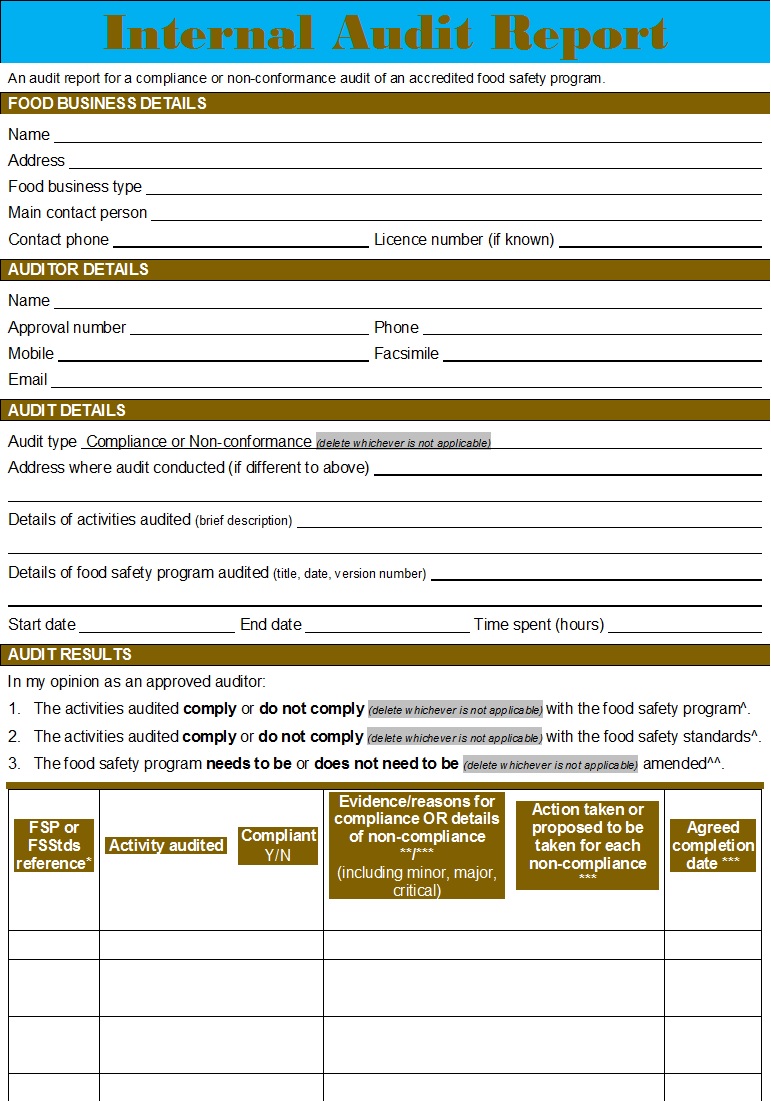
Here are the preview of Free Internal Audit Report Templates:

How To Edit And Download Free Internal Audit Report Templates?
All the templates are ready-made and ready to use. You can edit, use and download any of the template that you like. Mae sure to have MS Office installed in your system to further work with our templates. The Most commonly used formats are Word And Excel. Make necessary changes that you need to or you can use it as it is.
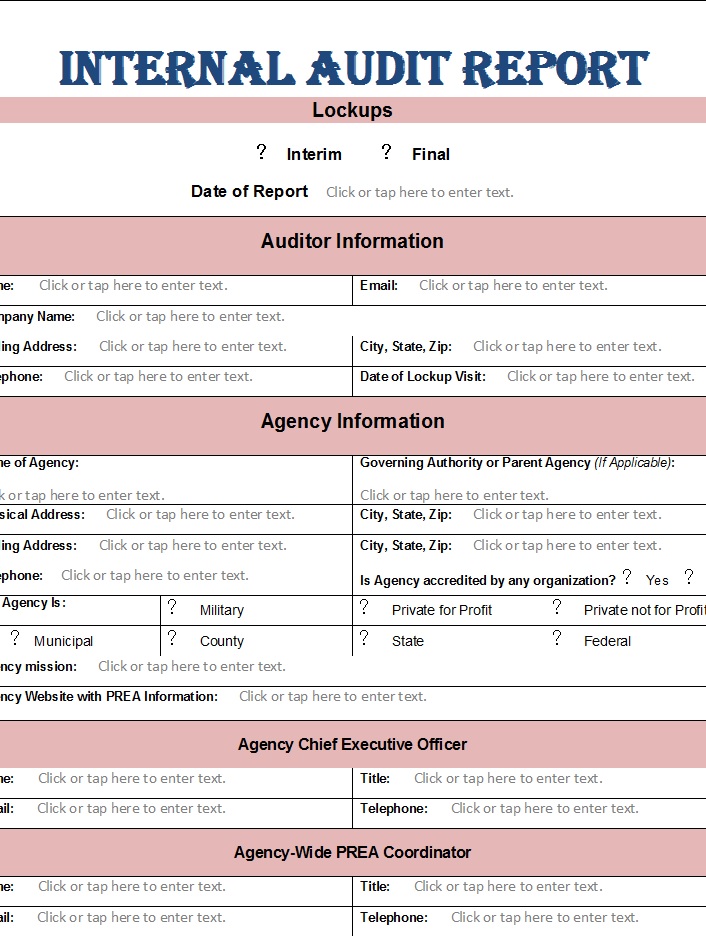
Key Elements of a Company Internal Audit Report Template
An effective internal audit report template should contain several essential components. These sections ensure that all important information is documented and presented clearly.
1. Basic Information
The report should begin with basic information such as:
-
Audit title
-
Department or process audited
-
Date of audit
-
Name of auditor
-
Report submission date
This section helps identify the purpose and context of the audit.
2. Objectives
The audit objective explains why the audit was conducted. It describes the specific goals the auditors aim to achieve, such as reviewing financial controls, assessing operational efficiency, or verifying compliance with company policies.
Clear objectives help readers understand the purpose of the audit and evaluate whether the goals were achieved.
3. Scope of the Audit
The scope defines the boundaries of the audit. It specifies which departments, processes, or time periods were reviewed. For example, the audit scope may include reviewing financial transactions for the last fiscal quarter or evaluating inventory management procedures. See also executive summary Report.
Defining the scope ensures that readers know exactly what was examined during the audit.
4. Audit Methodology
This section describes how the audit was conducted. It may include methods such as:
-
Document review
-
Interviews with employees
-
Observation of processes
-
Data analysis
-
Sample testing
Providing this information increases transparency and strengthens the credibility of the audit findings.
5. Audit Findings
The findings section is one of the most important parts of the report. It lists issues or observations discovered during the audit.
Each finding should include:
-
Description of the issue
-
Evidence supporting the observation
-
Risk or impact of the issue
Clear and factual findings help management understand potential risks and areas for improvement.
6. Risk Assessment
In many internal audit reports, findings are categorized based on risk levels such as:
-
High risk
-
Medium risk
-
Low risk
This classification helps management prioritize corrective actions and focus on the most critical issues first.
7. Recommendations
After identifying issues, auditors should provide practical recommendations for improvement. Recommendations may include updating procedures, improving internal controls, providing employee training, or implementing new monitoring systems.
The goal is to offer solutions that help the organization strengthen its processes.
8. Management Response
Some internal audit templates include a section where management can respond to the findings and recommendations. This response may outline planned corrective actions and timelines for implementation.
Including this section promotes accountability and encourages collaboration between auditors and management.
9. Conclusion and Summary
The final section summarizes the overall audit results. It provides a brief overview of key findings and highlights the general condition of the audited department or process. See also Financial Account Template.
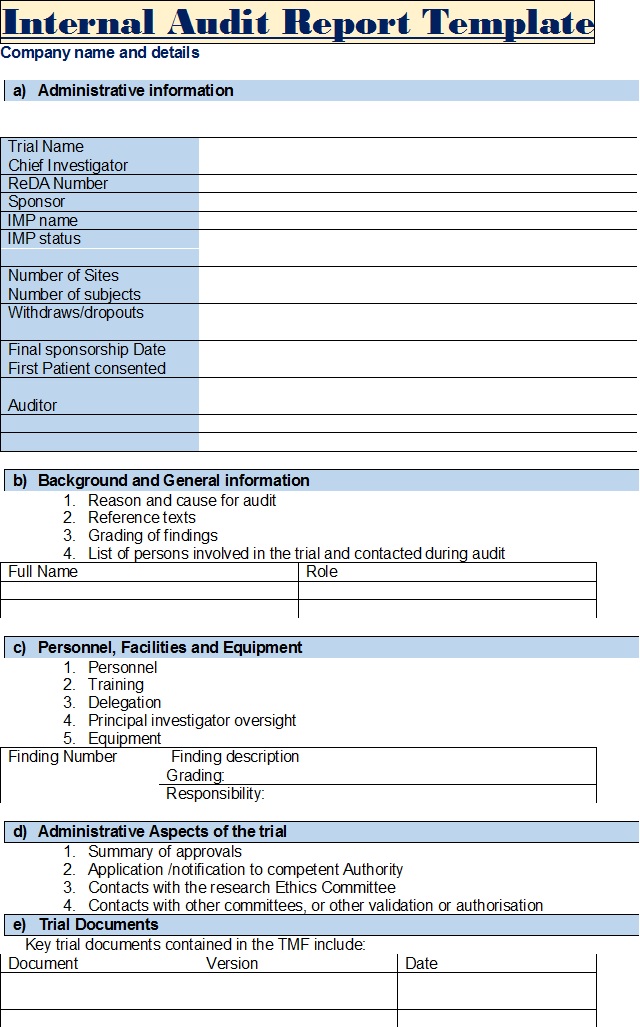
FAQ Company Internal Audit Report:
Who uses internal audit report templates?
Internal audit report templates are mainly used by internal auditors, compliance officers, finance teams, and management staff within an organization. These professionals use the templates to evaluate internal processes, financial controls, and regulatory compliance.
Are internal audit report templates customizable?
Yes, most internal audit report templates can be customized to suit the needs of a specific company or industry. Organizations can add or remove sections depending on their audit requirements, regulatory standards, and reporting preferences.
What is the difference between internal and external audit reports?
An internal audit report is prepared by a company’s internal audit team to review internal processes and controls. An external audit report, on the other hand, is prepared by independent auditors who evaluate a company’s financial statements and compliance with accounting standards.
How often should internal audit reports be prepared?
The frequency of internal audits depends on the organization’s policies and risk levels. Some companies conduct audits quarterly or annually, while others perform them more frequently for high-risk departments or critical processes.