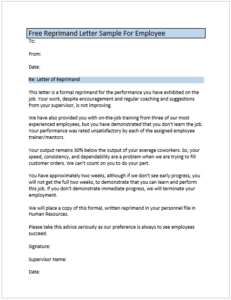
Letter of Reprimand Template – Free Employee Disciplinary Letter
A letter of reprimand is a formal written notice used by an employer to address an employee’s misconduct, policy violation, unacceptable behavior, or ongoing performance problem. It documents the issue, explains the expected corrective action, and may warn the employee that continued problems could result in further disciplinary action.
A professional letter of reprimand should be factual, specific, and respectful. It should focus on the employee’s conduct or performance rather than using emotional or unnecessarily harsh language.
What Is a Letter of Reprimand?
A letter of reprimand is a formal disciplinary document issued by an employer, manager, or other authorized person to an employee. It communicates that specific conduct or performance does not meet workplace expectations and that improvement or corrective action is required.
A reprimand can be used for issues such as repeated attendance problems, misconduct, failure to follow company policies, inappropriate workplace behavior, insubordination, or persistent performance deficiencies.
In some organizations, a letter of reprimand becomes part of an employee’s personnel record. The exact process and consequences depend on the employer’s policies and applicable employment requirements.
Letter Of Reprimand Templates:
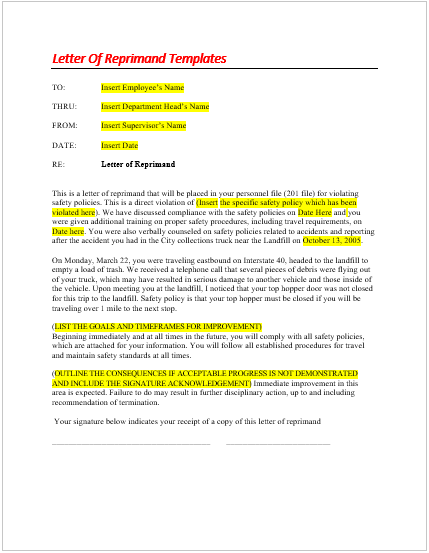

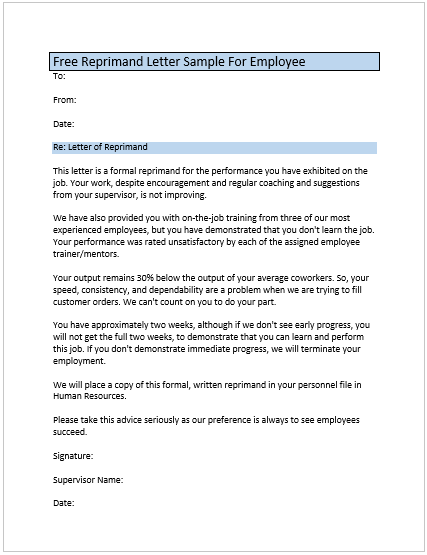
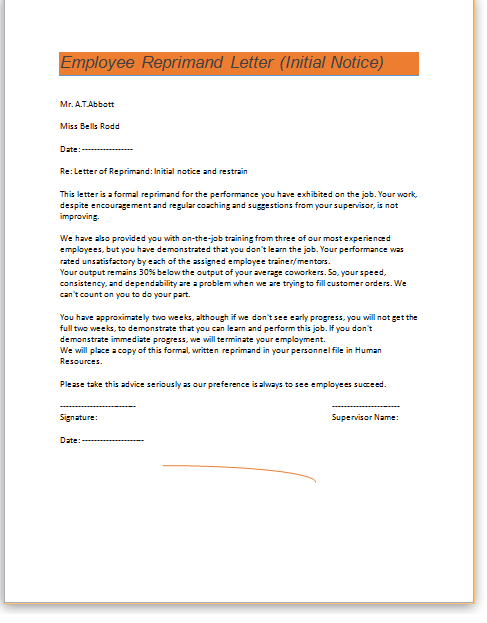
Employee Reprimand Letter Example:
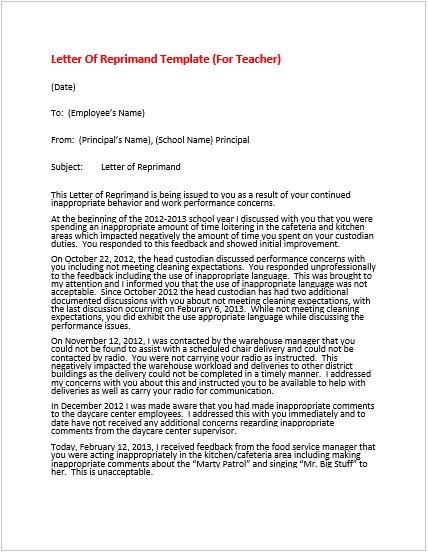
First Warning Letter Template:
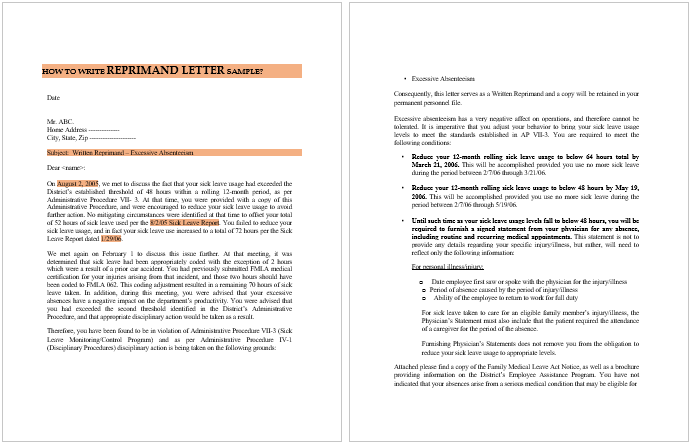
Employee Misconduct Letter Template:
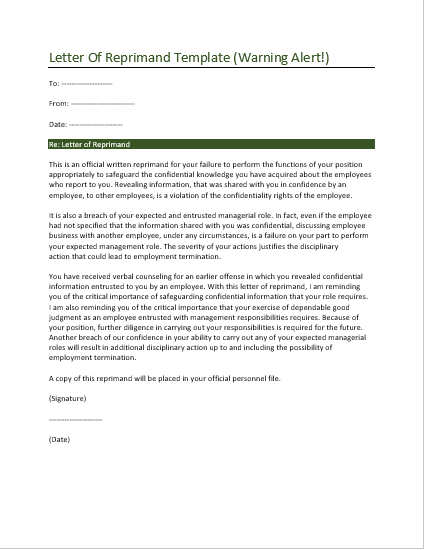
What Should a Letter of Reprimand Include?
A well-written reprimand letter should make the issue and expectations clear.
Employee and Company Information
Include the employee’s name, job title, department, company name, and the date of the letter.
Description of the Incident
Clearly describe what happened, including relevant dates, locations, and facts. Avoid vague statements or unsupported accusations.
Policy or Expectation
Identify the company policy, workplace rule, performance standard, or expectation that was not followed, when appropriate.
Previous Discussions or Warnings
If the issue has been discussed previously, briefly reference relevant conversations, warnings, or corrective actions.
Required Improvement
Explain what the employee is expected to do differently going forward. Expectations should be specific and realistic.
Consequences
The letter may explain that continued violations or failure to improve could result in additional disciplinary action, consistent with company policy.
Acknowledgment
Some employers ask the employee to sign the letter to acknowledge receipt. A signature generally should not be presented as an admission that the employee agrees with every statement unless the employer’s policy specifically provides otherwise.
Common Types of Reprimand Letters:
Employers may use different versions of a reprimand depending on the circumstances.
- Letter of Reprimand for Attendance
Used to address repeated tardiness, absenteeism, or other violations of attendance requirements.
- Letter of Reprimand for Insubordination
Used when an employee fails to follow a reasonable and lawful workplace instruction or otherwise engages in conduct that violates company expectations.
- Letter of Reprimand for Misconduct
Used to formally document inappropriate or unacceptable workplace behavior.
- Letter of Reprimand for Poor Performance
Used when an employee consistently fails to meet established performance expectations.
- Letter of Reprimand for Policy Violation
Used when an employee violates a company rule, procedure, or workplace policy.
- Letter of Reprimand vs. Written Warning
The terms letter of reprimand and written warning are sometimes used interchangeably, but an organization’s disciplinary policy may distinguish between them.