Food Journal Template: Track Your Food, Nutrition, Goals, and Journey
A Food Journal Template is more than a simple record of what you eat. It is a practical tool that helps you understand your daily eating habits, monitor nutritional intake, stay connected to your health goals, and track your progress over time.
Whether your goal is to lose weight, build healthier habits, improve fitness, manage your nutrition, or simply become more mindful about food, keeping a food journal can give you a clearer picture of your everyday choices.
What Is a Food Journal?
A food journal is a structured place where you record the foods and drinks you consume throughout the day. A well-designed template can go beyond listing meals by allowing you to track important information such as portion sizes, calories, nutrients, water intake, mood, energy levels, goals, and progress.
Instead of relying on memory, you can use your journal to create a complete picture of your daily food journey.
A structured template can make food tracking easier and more consistent. It gives you one place to record your meals, nutritional information, goals, and observations.
Over time, your journal can help you:
- Understand your eating patterns.
- Become more aware of portion sizes and food choices.
- Monitor nutritional intake.
- Compare daily habits with your targets
- Recognize patterns in energy, hunger, and mood.
- Celebrate progress and consistency.
- Identify areas where you want to improve.
- Stay accountable to your personal goals.
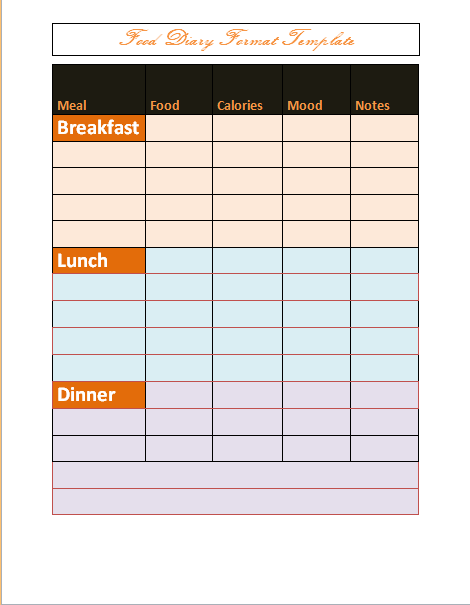
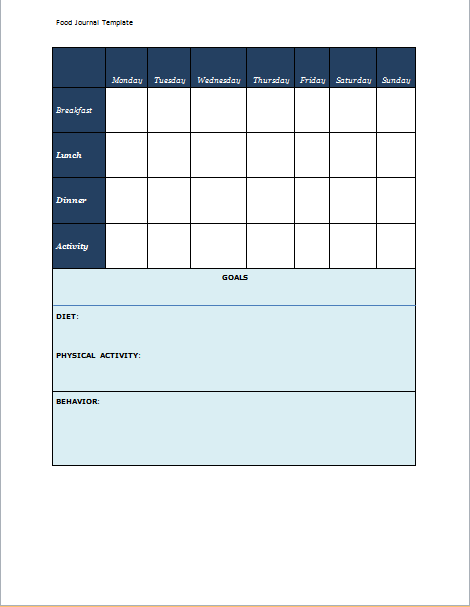
Food Journal Template:
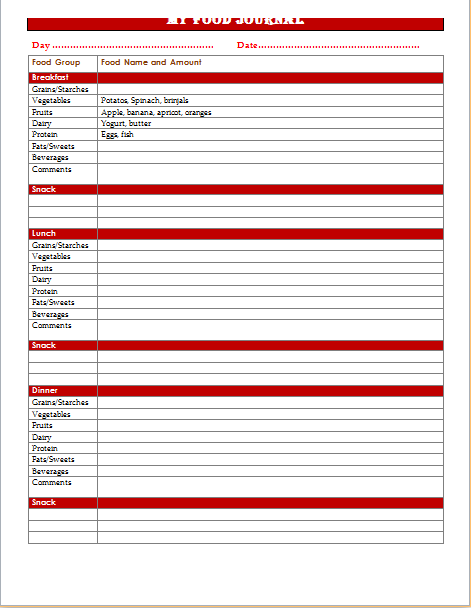

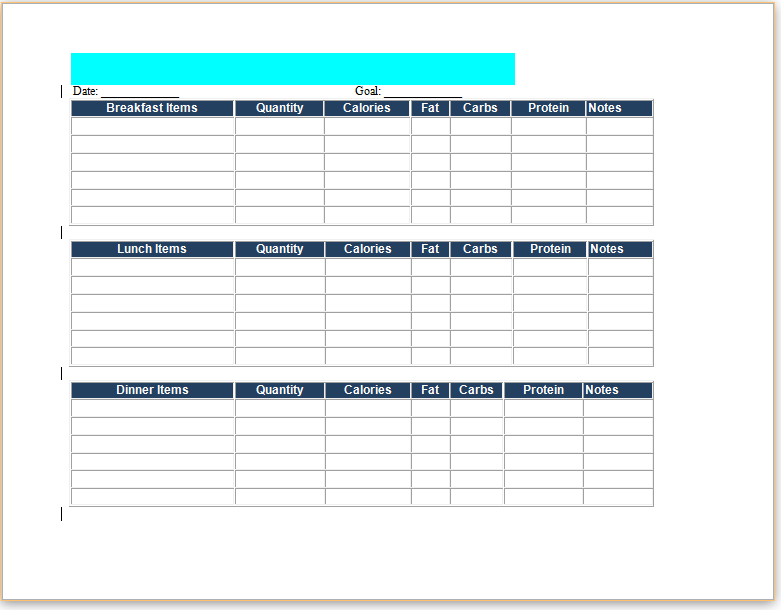
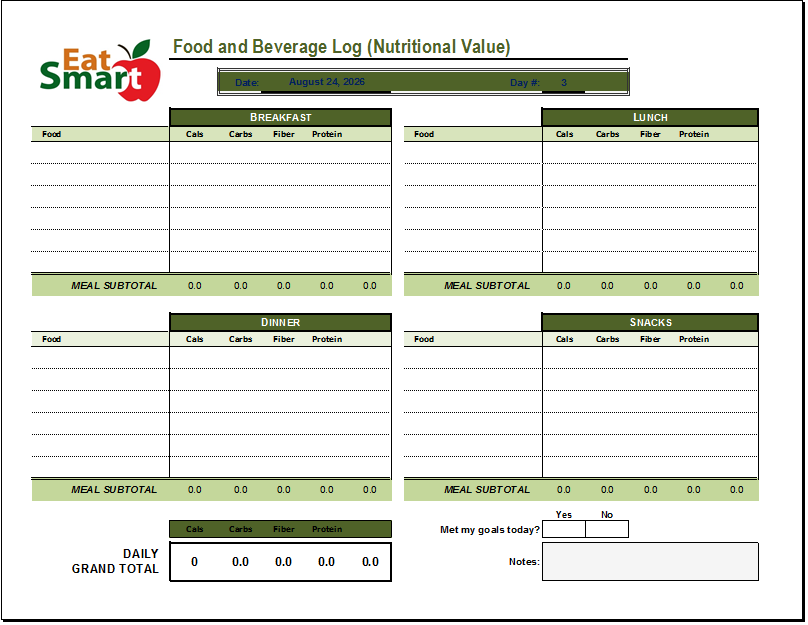
Food Log Template In Word:
What Should a Food Journal Template Include?
A complete food journal can be divided into several sections so that everything you need is available in one place.
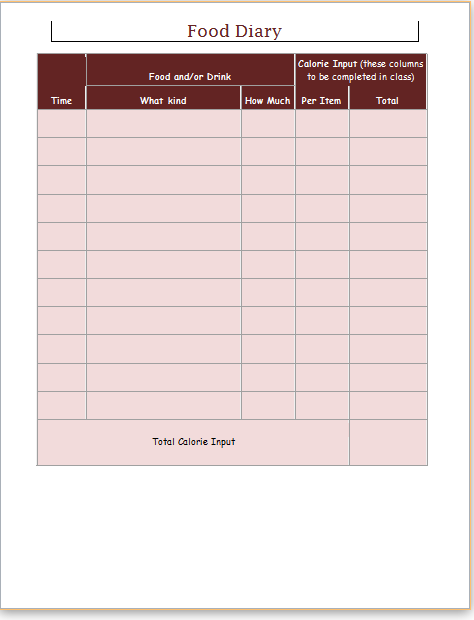
1. Daily Food Log
The foundation of the journal is your daily food record. You can document each meal, snack, and drink throughout the day.
Recording meals as they happen can make it easier to identify eating patterns, missed meals, frequent snacking, or foods that appear repeatedly in your routine.
2. Nutritional Value
Your food journal can also provide space for nutritional information. Depending on your needs, you may track calories, protein, carbohydrates, fats, fiber, sugar, sodium, or other nutrients.
A simple daily nutrition section might include:
- Calories: __________
- Protein: __________
- Carbohydrates: __________
- Fat: __________
- Fiber: __________
- Water: __________
- Other nutrients: __________
The purpose is not necessarily to make every meal perfect. Instead, nutritional tracking can help you understand what your usual diet looks like and where you may want to make changes.
3. Daily Targets
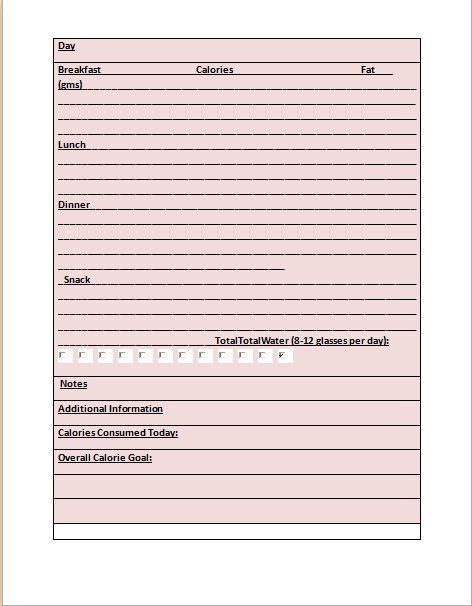
Your journal should connect your daily food choices with your bigger objectives. Create a section where you can define your targets and compare them with your actual intake.
My Daily Targets
- Calorie target: __________
- Protein target: __________
- Water target: __________
- Fruit/vegetable target: __________
- Meals planned: __________
- Other personal target: __________
This makes the journal more useful because you are not simply recording information—you are using that information to work toward something.
Track Your Health and Wellness Journey
Food is only one part of your overall journey. Adding a progress section can help you recognize changes that may not be obvious from one day to the next.
You could record:
- Starting point
- Current weight, if relevant to your goal
- Measurements, if relevant
- Energy level
- Sleep quality
- Exercise or physical activity
- Mood
- Weekly achievements
- Challenges
- Personal observations
Most importantly, focus on trends rather than judging yourself based on a single day.
Create a Complete Picture of Your Journey
The best Food Journal Template brings everything together: what you eat, what your food provides, what you are working toward, and how you are progressing.
By recording your daily meals alongside nutritional information, personal targets, reflections, and progress, your journal becomes more than a food diary. It becomes a personal roadmap that helps you understand your habits and make informed decisions throughout your journey.
Whether you use it for a few weeks or make it part of your everyday routine, a well-organized food journal can give you the clarity and structure you need to stay focused on your goals.