Best 11 Free RAID Log Templates for Project Management (Excel & Google Sheets)
RAID Log Templates:
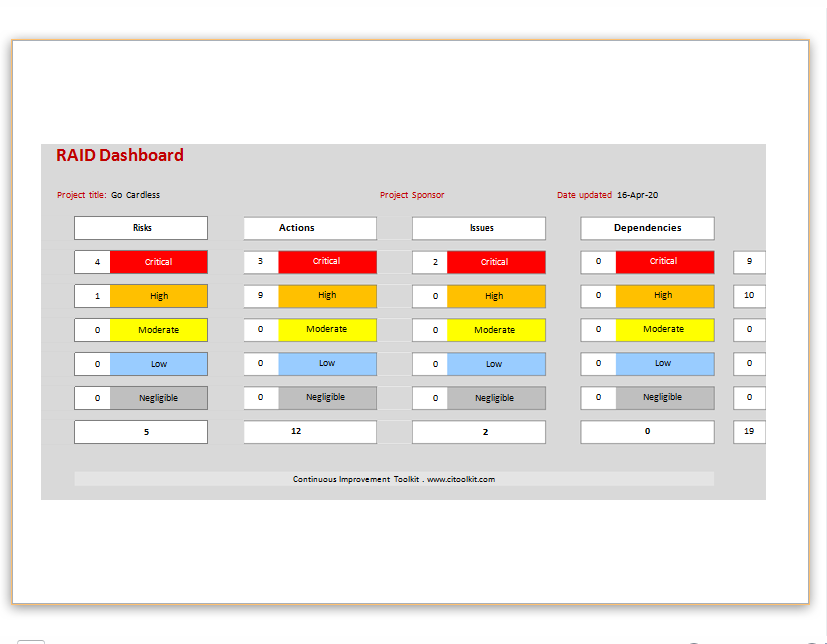
With projects comes risks and unwanted situations. And if you do not tackle them properly, they can lead to a slow procession or even project termination. Managing risks and avoiding then for good is the job and component of project managers. And the tools that help them to assess and evaluates different stages and phases of the project can lead to a successful project and venture. The following post contains Best 11 Free Raid Log Templates for your help and assistance. You can edit, use and download any of the template that you like. All you need is to follow the instructions given below. See also vehicle log template.
By breaking the acronym down, we can clearly see how each quadrant functions:
-
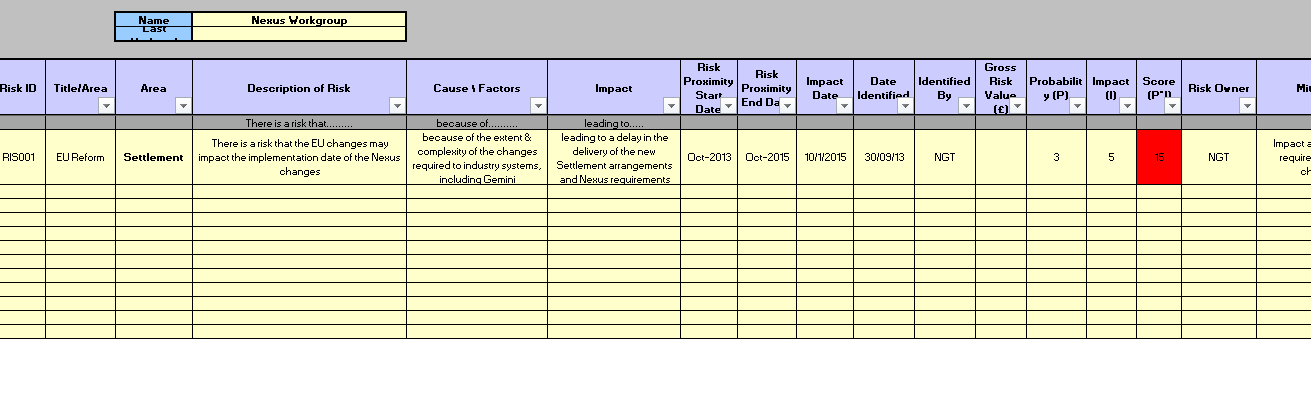
Risks (R): Potential events or hurdles that might happen in the future and negatively impact the project. Risks require a proactive mitigation strategy.
-
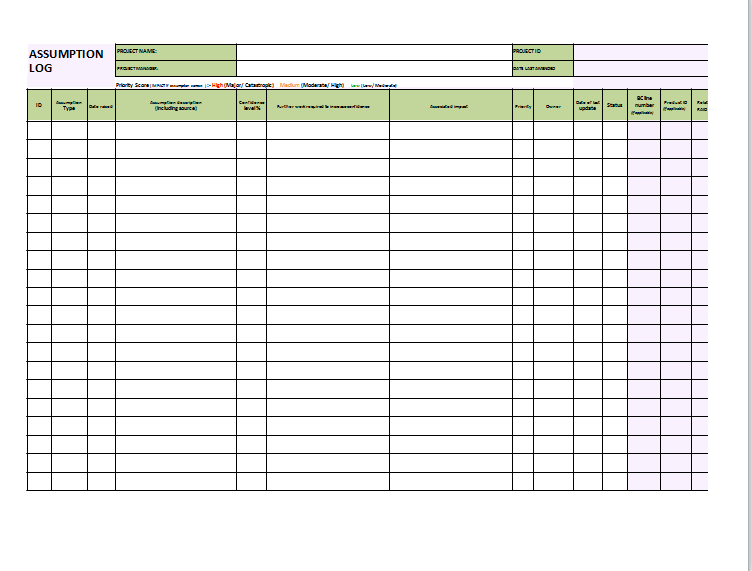
Assumptions (A): Factors you believe to be true for the project to succeed, but have not yet been concrete or verified (e.g., assuming a specific team member will be available in Q3).
-
Issues (I): Current, active problems that have already happened and require immediate corrective action or escalation.
-
Dependencies (D): Internal or external tasks that must be started or completed in a specific order for the project to progress (e.g., Software Testing cannot begin until Code Delivery is finished).
Free RAID Log Templates (Trackers and Planners):
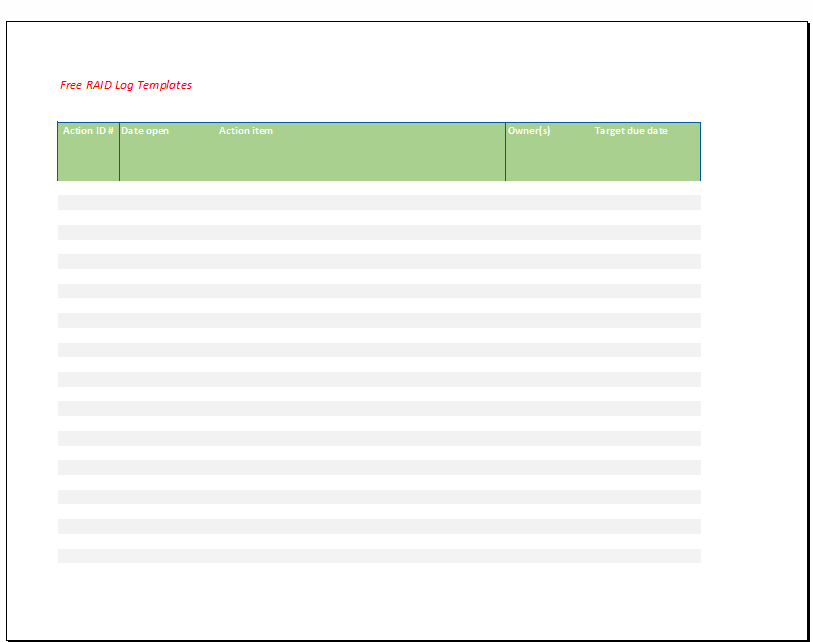
Project management involves navigating important webs of risks, assumptions, issues, and dependencies. A well-created RAID log is necessary to identify, track and mitigate potential project hazards. Below you can understand the benefits and effects of using RAID log in a project.
- Enhanced risk Management
- Improved Assumptions Validation
- Proactive Issue resolution
- Effective dependency management
- Increases stakeholder Transparency

Step-by-Step Guide: How to Maintain Your RAID Log
Downloading a free template is only half the battle; maintaining its integrity is what ensures project success. Use this lifecycle routine to make your log highly effective:
Step 1: Initial Discovery (The Kickoff)
During project initialization, host a collaborative session. Have your team identify immediate assumptions and dependencies. Log them immediately.
Step 2: Assign Clear Ownership
Every single entry in your RAID log must have a single individual’s name attached to it. A risk with no owner will never be mitigated; an issue with no owner will never be resolved.
Step 3: Establish a Weekly Cadence
A RAID log is a living, breathing document. Dedicate 15 minutes during weekly status meetings to review the log. Update progress, close out resolved issues, and convert validated assumptions into project facts.
Step 4: Archive and Learn
When the project concludes, do not delete your log. Save it in a central PMO archive. Future project managers can review your past RAID logs to anticipate issues on similar initiatives down the line. See also reading log template.
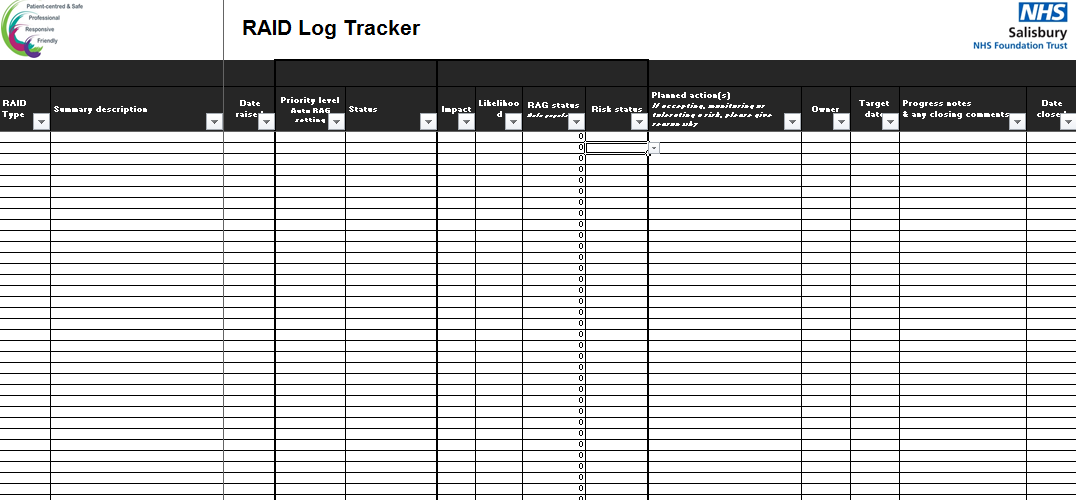
RAID Log Template: Frequently Asked Questions
Managing a project’s vulnerabilities can be tricky, especially when transitioning from simple checklists to a formal framework. Below are the most common questions project managers ask when implementing a RAID log.
What is the difference between a Risk and an Issue?
This is the most common point of confusion.
-
A Risk is a potential event that has not happened yet (e.g., “The client might delay approval on the design blueprints”). It requires an advance mitigation plan.
-
An Issue is a live problem that is happening right now (e.g., “The client rejected the design blueprints yesterday”). It requires immediate corrective action.
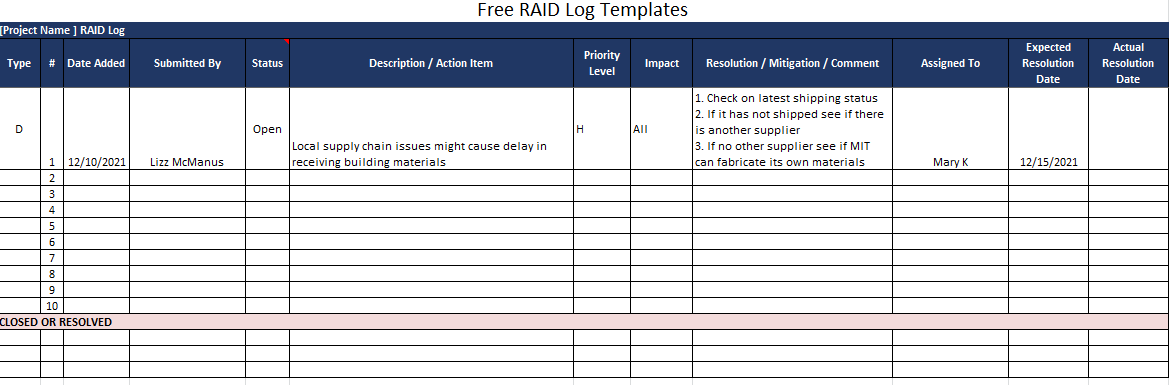
How To Make RAID Log Tracker And Planners?
RAID Logs enhance project risk management and transparency. It is a regular update and communication are essential. It also helps to prioritize and resource allocation to maximise the smooth flow of project progress.
Risks Management:
- Potential problems impacting the project. It identifyies through risk assessments and stakeholder inputs
- Prioritized based on likelihood and impact
Assumptions:
A good RAID Log Templates analyses factors taken for granted. It validates through research and stakeholder confirmation. You can also monitor changes and foresee any problem occuring due to inaccuracies.
Issues:
- Current problems requiring resolution
- Emphasis based on urgency and impact
- Assigned to owners for resolution
- relationship between project tasks or components
Dependencie:
- Identified through task analysis and stakeholder input
- Monitored for changes and impacts
RAID Log Samples:
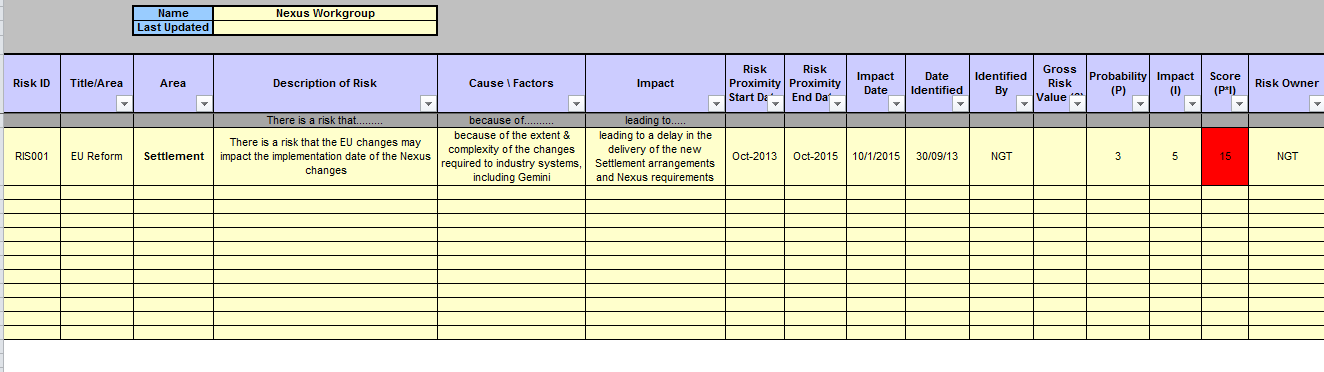
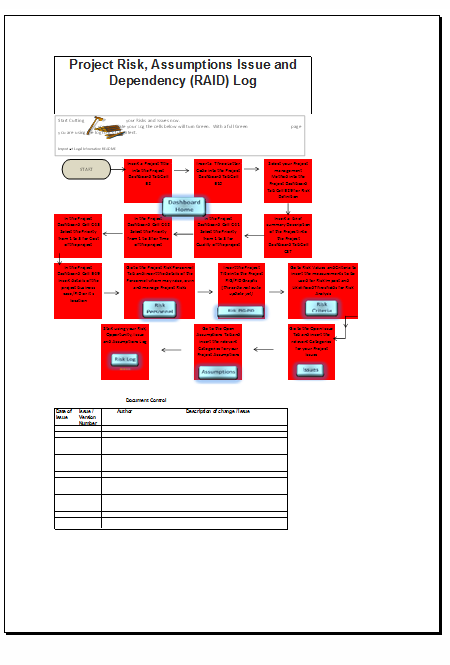
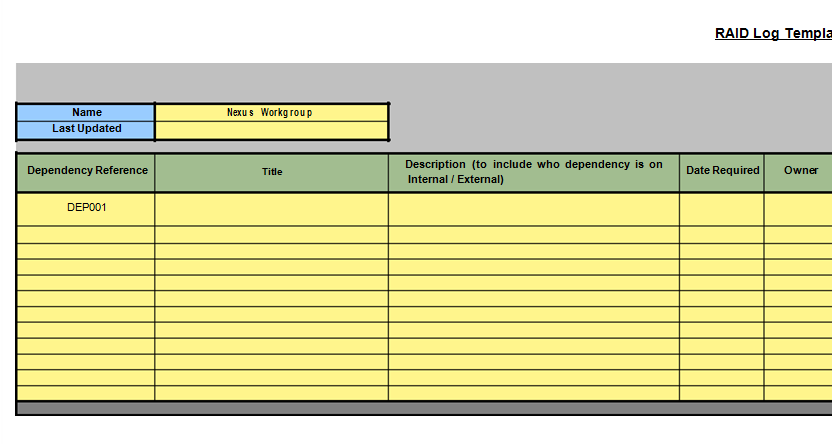
How To Edit And Download Free RAID Log Examples?
You can always make a Log Template rom scratch. But making a report from the start and then concentrating on the data and accuracy can be quite challenging. Instead you can download a ready-made and ready to use RAID log Templates. These are user friendly and easy to edit RAID Trackers.
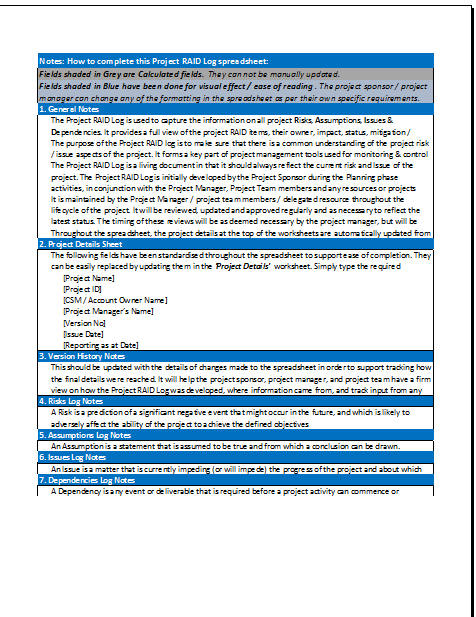
Download the templates by clicking the free download button given below each template preview. Open it n your system. Start adding in your data. It is as simple as that.